MADE IN THE USA SINCE



7 Ways Brush Hogging Can Improve Your Livestock Pasture
- Sales Rep Acct
- Swisher Products, Tips, and Advice
- Jan 27, 2026
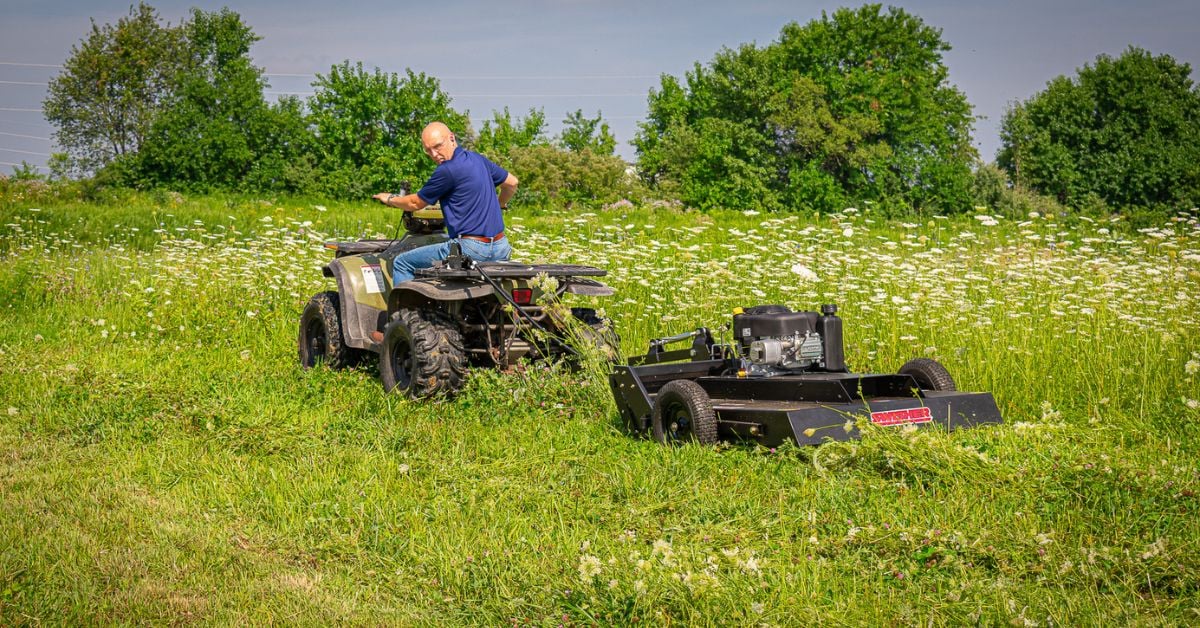
Everyone knows that a well-managed pasture is crucial for productive livestock. Still, actually achieving that is easier said than done. Fortunately, brush hog mowers are great tools for helping you do so. If you utilize it correctly, you’ll be able to enhance grazing quality, animal health, and overall land value in no time. Don’t simply take our word for it, though. Here is a comprehensive look at the ways in which brush hogging can improve your livestock pasture.
1. Promoting Grass Growth Over Weeds
Resource competition within a pasture is relentless. Aggressive species such as briars, broadleaf weeds, and saplings actively deplete soil nutrients and moisture that should be fueling your Bermuda, Fescue, or Clover stands. As these weeds grow taller, they shade out lower-growing forage grasses, leading to a decline in higher-quality biomass.
Brush hogging effectively neutralizes this advantage. Most forage grasses possess physiological adaptations that allow them to withstand grazing and cutting, with growing points located near the soil surface. Conversely, weeds and woody brush rely on vertical growth to dominate the canopy. Clipping these competitors before they set seed stresses their root reserves and opens the canopy to sunlight. This exposure stimulates grass tillers to proliferate, resulting in a denser turf that naturally suppresses future weed emergence.
2. Breaking the Parasite Life Cycle
Internal parasites pose a significant threat to livestock profitability and health. Whether managing cattle, sheep, goats, or horses, parasite larvae require specific environmental conditions—namely, the moisture and shade found in tall, neglected vegetation—to survive.
Excessive grass height maintains a damp microclimate at the plant base, creating an ideal incubation zone for stomach worms and other parasites hatched from manure. Livestock grazing in these conditions is at high risk of ingesting these harmful organisms and becoming infected.
Regular mowing exposes the soil surface and plant bases to ultraviolet (UV) radiation and wind. This desiccation process dries out manure and effectively destroys parasite larvae before they can harm your herd. By managing forage height, you are actively sanitizing the grazing environment and protecting your animals.

3. Encouraging Tender, Palatable Regrowth
Livestock exhibit selective grazing behaviors, often consuming specific patches of grass while ignoring adjacent stands. This behavior is typically driven by plant maturity. As forage plants age, they undergo lignification—a process where cell walls harden and become woody. This reduces digestibility and protein content as the plant shifts energy toward seed production. Animals naturally prefer the “vegetative” state of plants—the tender, leafy, and high-protein growth. They will actively avoid mature, stemmy vegetation.
In this case, brush hogging functions as a biological reset. Removing mature stems and seed heads forces the plant to revert to a vegetative state, prioritizing the production of soft, nutrient-rich leaves to capture sunlight. This regrowth offers superior palatability and digestibility. A consistent mowing regimen extends this high-quality phase, supporting better weight gain and reducing the need for supplemental grain.
4. Maximizing Efficiency with a Tow-Behind Brush Hog Mower
Not all pastures are conducive to full-sized agricultural tractors. Many properties feature rough terrain, wooded areas, or smaller acreages where heavy machinery can cause undesirable soil compaction or lack maneuverability. In these scenarios, equipment selection is paramount.
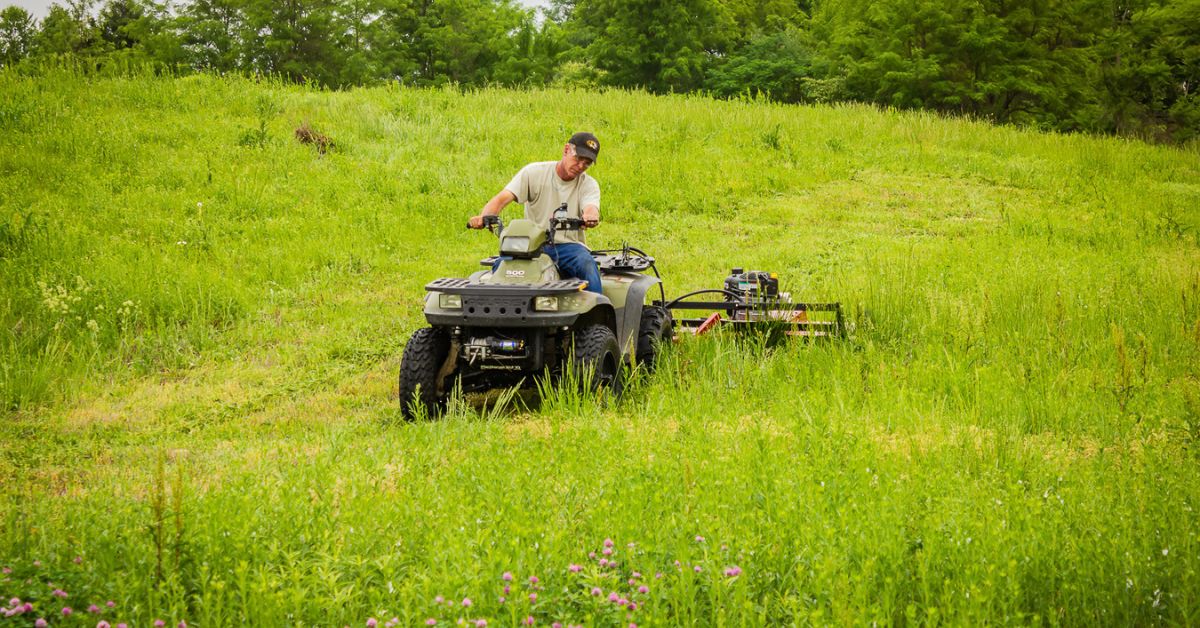
Deploying a tow-behind brush hog mower with an ATV or UTV provides the agility necessary for effective management. These units exert significantly less ground pressure than tractors, preserving soil structure and promoting healthy root development. Their compact design allows for precise operation around desirable trees and within tight fence corners that three-point hitch implements often cannot reach.
Equipped with independent engines, these mowers do not rely on a power take-off system. These separate engines help them maintain a more consistent blade tip speed regardless of travel velocity. With this kind of capability, landowners can maintain pastures efficiently with their existing utility vehicles, turning pasture maintenance into a manageable task rather than a logistical challenge.
5. Controlling Toxic Plants and Saplings
Regional noxious weeds—such as buttercup, hemlock, nightshade, and perilla mint—are opportunistic invaders. Without intervention, they establish rapidly in neglected pastures. While chemical herbicides offer a solution, they can be costly, necessitate grazing restrictions, and may harm beneficial legumes like clover.
Mechanical control offers a chemical-free alternative. Consistent mowing prevents toxic species from flowering and dispersing seed. Furthermore, livestock are most vulnerable to toxic plant ingestion when quality forage is scarce. By maintaining a dense stand of desirable grass, as previously mentioned, you reduce the risk of animals browsing on harmful vegetation due to hunger.
Additionally, brush hogging arrests the natural succession of land “re-wilding.” Left unchecked, pastures can transition into young forests in as little as two years. Saplings of locust, cedar, and mesquite can quickly dominate an area. A rotary cutter effectively severs these woody invaders before they develop trunks substantial enough to damage equipment or require manual removal.
6. Improving Accessibility and Herd Management
As most farmers will tell you, effective pasture management requires clear visibility. Overgrown fields obstruct lines of sight, concealing downed fences, injured livestock, or predators. Plus, the tall cover provides a haven for coyotes and other threats to young stock.
Since a freshly clipped pasture will significantly enhance visibility, you’ll want to make a point of keeping it well-maintained. When you’ve taken the time to clear out long grasses, you’ll be able to better facilitate rapid inspection of fence lines for integrity issues and remove the habitat preferred by rodents and snakes, thereby discouraging their predators. Plus, clear visibility allows for early detection of animal health issues—such as lameness, pinkeye, or isolation behavior—enabling prompt intervention.
7. Natural Manure Distribution
While chain harrows are the primary implement for manure management, brush hogging provides a secondary benefit that can improve your livestock pasture in this regard. Mowing grazed pastures shatters dried manure piles, dispersing nutrients across a broader surface area.
This action mitigates the “zone of repugnance”—localized areas of tall, lush grass surrounding manure piles that livestock refuse to graze. By breaking up these concentrations, nitrogen and phosphorus are distributed more evenly into the soil profile, preventing nutrient burn in specific spots while addressing deficiencies elsewhere. This accelerates the incorporation of organic matter into the soil more effectively than natural decomposition.