MADE IN THE USA SINCE



How to Effectively Clear Brush on Your Property
- Sales Rep Acct
- Swisher Products, Tips, and Advice
- Feb 25, 2025
Maintaining a clear, well-managed property is essential for companies wanting to keep their businesses looking good. Outside of aesthetics, overgrown brush can pose safety hazards and hinder functionality, especially for commercial districts or rental spaces. Clearing brush from your property can help create a more usable space, reduce fire risks, and improve overall curb appeal.
This guide will cover everything you need to know about this topic. That way, whether you’re maintaining a small rental lot or a sprawling corporate landscape, you’ll be able to effectively clear brush from your property with ease.
Understanding the Types of Brush and Their Impact
In order to properly clear brush from your business, you must first understand what you’re dealing with. Not all brush is the same, and different types require different approaches. Knowing this will allow you to address potential risks more effectively and maximize efficiency.
Tall Grass and Weeds
In most cases of uncontrolled brush, properties will be dealing with tall grasses or fast-growing weeds like crabgrass, ragweed, or clover. Left unchecked, these can crowd out desirable plants, making the land look unkempt, which won’t be a good look for your business. Overgrown grass also provides nesting grounds for pests such as rodents and insects, something else you won’t want to deal with.
Thick Shrubs
While not all shrubs are bad, some thicker ones like privet, buckthorn, or wild blackberry are known to quickly invade open areas. These dense plants obstruct visibility, reduce accessibility, and are hard to remove with basic tools.
Small Trees and Saplings
Young trees or saplings that are neglected for years can become a significant problem if left unchecked. They require much more effort to remove, and their roots can disrupt nearby pathways, parking lots, or building foundations.
Fallen Debris
Branches, dead vegetation, and organic debris left untended are also classified as forms of brush. If not taken care of, they can present safety risks, particularly in high-traffic areas. These items can also harbor pests and create an overall impression of neglect for visitors.
Tools and Equipment Required for Safe and Efficient Brush Clearing
Clearing brush effectively begins with having the right equipment. Using proper tools not only saves time but also ensures the safety of your team. There are three main categories of tools crucial for this task: hand tools, powered equipment, and heavy machinery, but of course, safety gear is also essential to protect against potential hazards during the process.
Hand Tools
Hand tools are ideal for lighter clearing jobs or maintaining smaller properties. They offer precision and are a cost-effective option for basic maintenance. Tools such as machetes or brush knives are useful for cutting down light shrubbery and tall weeds. Outside of those, pruning shears come in handy for trimming shrubs or overgrown branches, while hand saws enable the cutting of small trees or saplings with ease.
Powered Equipment
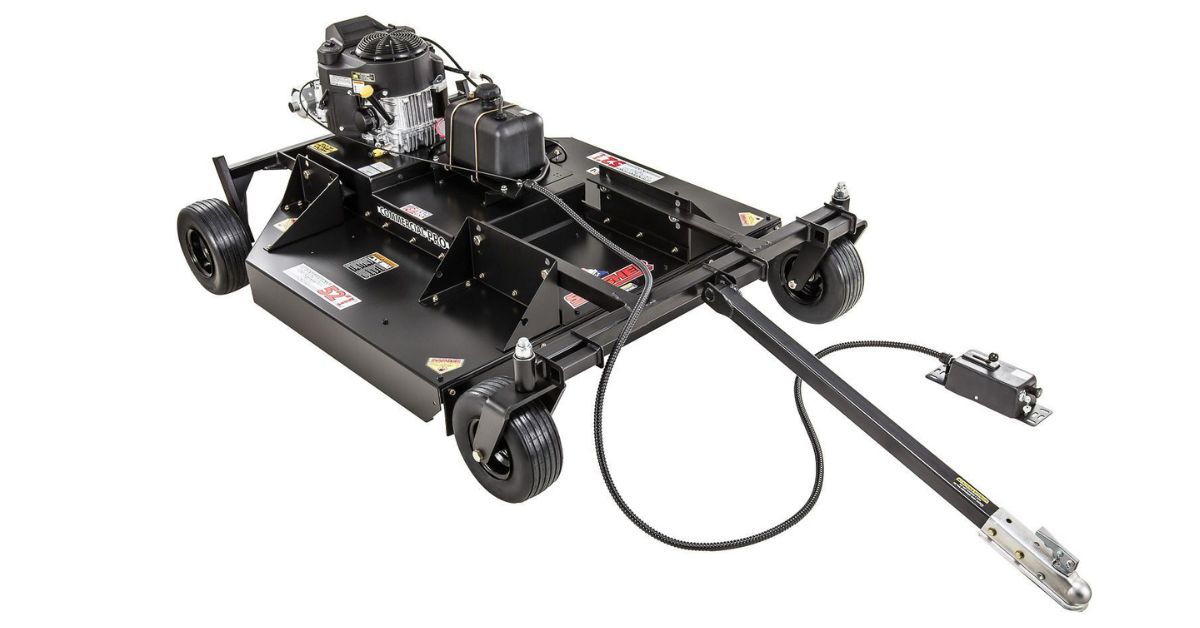
For larger properties or heavily overgrown areas, powered equipment is a more efficient choice. String trimmers, often known as weed whackers, work well for clearing grassy areas and light vegetation. However, if weed whackers aren’t strong enough, you’ll likely need a dedicated brush mower. They’re specifically designed to handle dense vegetation, including thick shrubs and saplings. For larger pieces of brush like small trees or heavy shrubs, chainsaws will be a must-have.
Heavy Machinery
When dealing with large parcels of land covered in heavy overgrowth, heavy machinery becomes a necessity. Skid steer loaders equipped with forestry attachments are highly effective for removing dense brush and tree stumps, while bulldozers are ideal for leveling large areas and clearing brush in bulk. If you have a lot of loose brush, wood chippers are useful for turning it into mulch, simplifying cleanup altogether.
Safety Gear
Safety is paramount in any brush-clearing project. Workers must be equipped with heavy-duty gloves to protect against cuts and thorns, as well as protective eyewear to shield their eyes from flying debris. Steel-toed boots provide essential foot protection, and hearing protection is necessary when operating loud equipment like chainsaws or wood chippers. Additionally, long-sleeved shirts and sturdy work pants help prevent injuries from sharp branches and contact with poisonous plants, so don’t overlook their importance here.
Step-by-Step Guide to Clearing Brush
With all of that out of the way, it’s time to go in-depth on how to effectively clear brush on your property. While it’s important to note that different types of properties may require tailored clearing methods, the steps below provide a detailed framework for addressing brush on any scale.
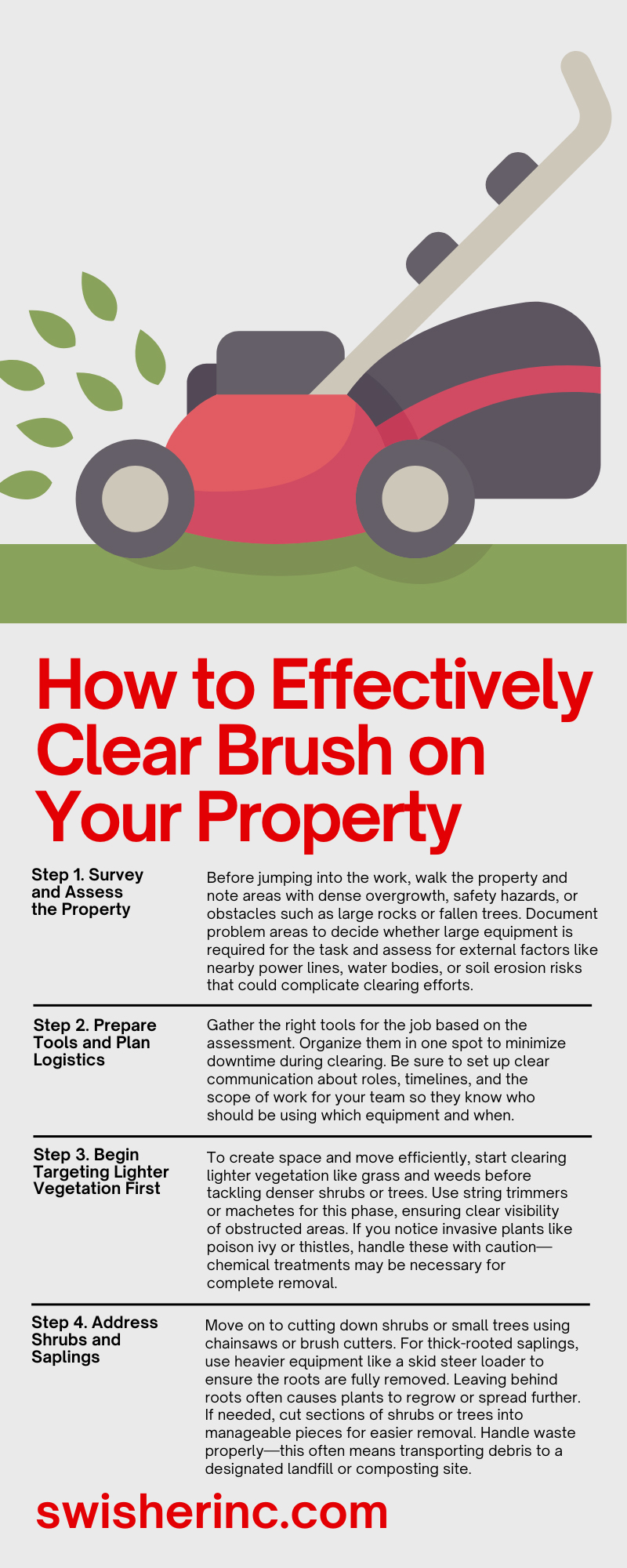
Step 1. Survey and Assess the Property
Before jumping into the work, walk the property and note areas with dense overgrowth, safety hazards, or obstacles such as large rocks or fallen trees. Document problem areas to decide whether large equipment is required for the task and assess for external factors like nearby power lines, water bodies, or soil erosion risks that could complicate clearing efforts.
Step 2. Prepare Tools and Plan Logistics
Gather the right tools for the job based on the assessment. Organize them in one spot to minimize downtime during clearing. Be sure to set up clear communication about roles, timelines, and the scope of work for your team so they know who should be using which equipment and when.
Step 3. Begin Targeting Lighter Vegetation First
To create space and move efficiently, start clearing lighter vegetation like grass and weeds before tackling denser shrubs or trees. Use string trimmers or machetes for this phase, ensuring clear visibility of obstructed areas. If you notice invasive plants like poison ivy or thistles, handle these with caution—chemical treatments may be necessary for complete removal.
Step 4. Address Shrubs and Saplings
Move on to cutting down shrubs or small trees using chainsaws or brush cutters. For thick-rooted saplings, use heavier equipment like a skid steer loader to ensure the roots are fully removed. Leaving behind roots often causes plants to regrow or spread further. If needed, cut sections of shrubs or trees into manageable pieces for easier removal. Handle waste properly—this often means transporting debris to a designated landfill or composting site.
Step 5. Manage Debris Efficiently
Once the major vegetation is cleared, focus on fallen branches, dead leaves, and other debris. You can use a wood chipper to convert this debris into mulch for gardens or landscaping, reducing waste while offering a more practical use. If you’re dealing with large amounts of vegetation, you may need to hire a dumpster or debris-hauling service to handle disposal properly.
Step 6. Conduct Finishing Touches and Prevent Future Brush Overgrowth
After all major clearing is complete, take time to refine rough edges. Assess if certain sections of the property require reseeding for grass or protective measures like adding gravel to parking lots.
To prevent future overgrowth, schedule regular maintenance for minor trimming and cutting back regrowth. Consider using landscaping fabric or stone mulch in high-risk areas to prevent weeds. Additionally, evaluate whether long-term erosion control measures, such as planting native species, should be implemented to stabilize the soil. Doing this should help prevent major brush-related issues from regularly recurring.