MADE IN THE USA SINCE



Kinetic vs. Hydraulic Log Splitters: 4 Key Differences
- Sales Rep Acct
- Swisher Products, Tips, and Advice
- May 7, 2026
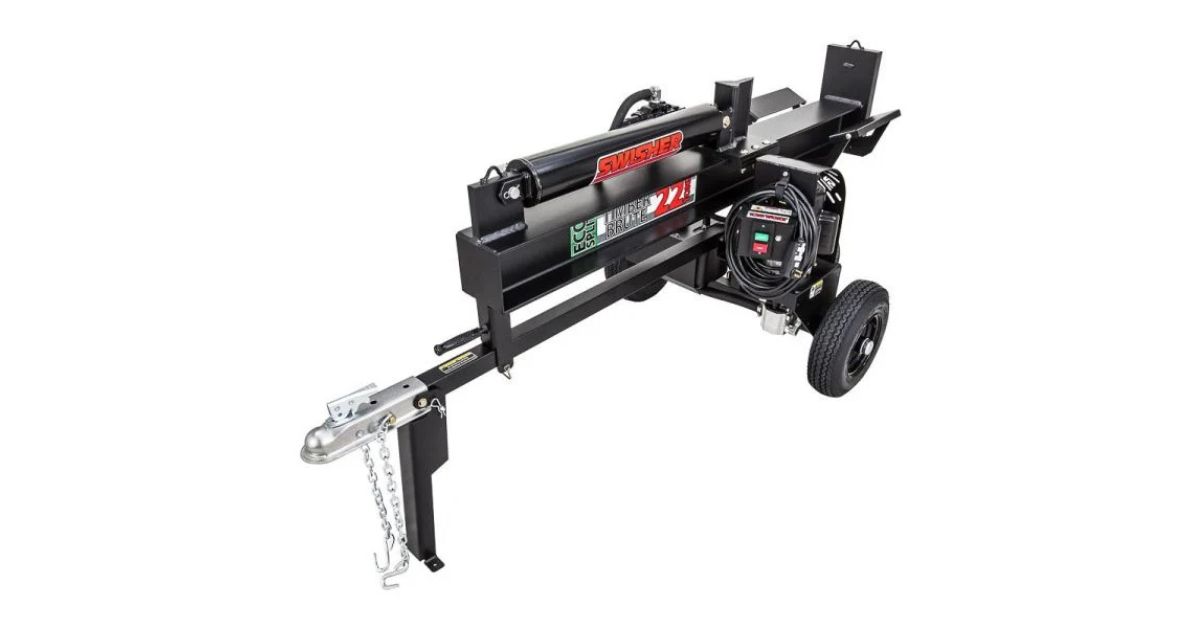
When you’re cutting and splitting wood, the splitter you own has to match the type of work you’re doing. A machine that’s fast with clean, smaller logs may not be the right fit for heavier rounds or tougher hardwood. While hydraulic and kinetic log splitters both reduce manual labor, they have some key differences you should know about before purchasing one or the other.
1. Splitting Mechanism
A hydraulic log splitter uses pressurized fluid to move the ram. When you engage the controls, the hydraulic system pushes the wedge into the log with steady force. That pressure continues through the stroke, so the machine doesn’t rely on one fast impact to finish the split.
A kinetic splitter uses a flywheel system instead. The flywheel builds stored energy as it spins, then releases that energy in a quick burst. This gives the machine a sharper motion, which can work well when the wood breaks apart cleanly.
2. Cycle Speed
Hydraulic splitters often work at a slower pace. The ram moves through the stroke under fluid pressure, then retracts before the next log is put into position. This slower cycle may increase overall cutting time, but it gives the operator a more controlled rhythm during each split.
Kinetic splitters usually move faster between splits. The ram can extend and return quickly, so the operator spends less time waiting for the machine to reset. That speed can make a noticeable difference when the pile contains straight-grain logs.
3. Force Under Resistance
Hydraulic splitters tend to handle stubborn wood more consistently because they keep applying pressure. If a log has knots or dense grain, the wedge can continue pushing instead of depending on a quick strike. That’s one reason hydraulic power often makes sense in commercial log splitters, where the machine may need to handle tougher rounds throughout the day.
Kinetic splitters behave differently when a log resists. If the flywheel’s burst of energy doesn’t finish the split, the operator may need to reposition the log and try again. This doesn’t make kinetic models ineffective, but it does mean they perform best when the wood splits without prolonged resistance.
4. Maintenance Needs
Hydraulic splitters’ maintenance needs are mostly tied to their fluid systems. Hoses can wear over time, seals can leak, and low fluid levels can reduce splitting power. Regular checks help the machine maintain pressure when the wood gets harder to split.
Since a big difference between hydraulic and kinetic splitters is that kinetic machines don’t use hydraulic fluid, they remove some of those service concerns. However, they still rely on moving mechanical parts that can wear with repeated use. Belts, bearings, and flywheel components need attention if the splitter sees frequent work.