MADE IN THE USA SINCE



What You Need To Know About Mower Cutting Width and Height
- Sales Rep Acct
- Swisher Products, Tips, and Advice
- Feb 23, 2026
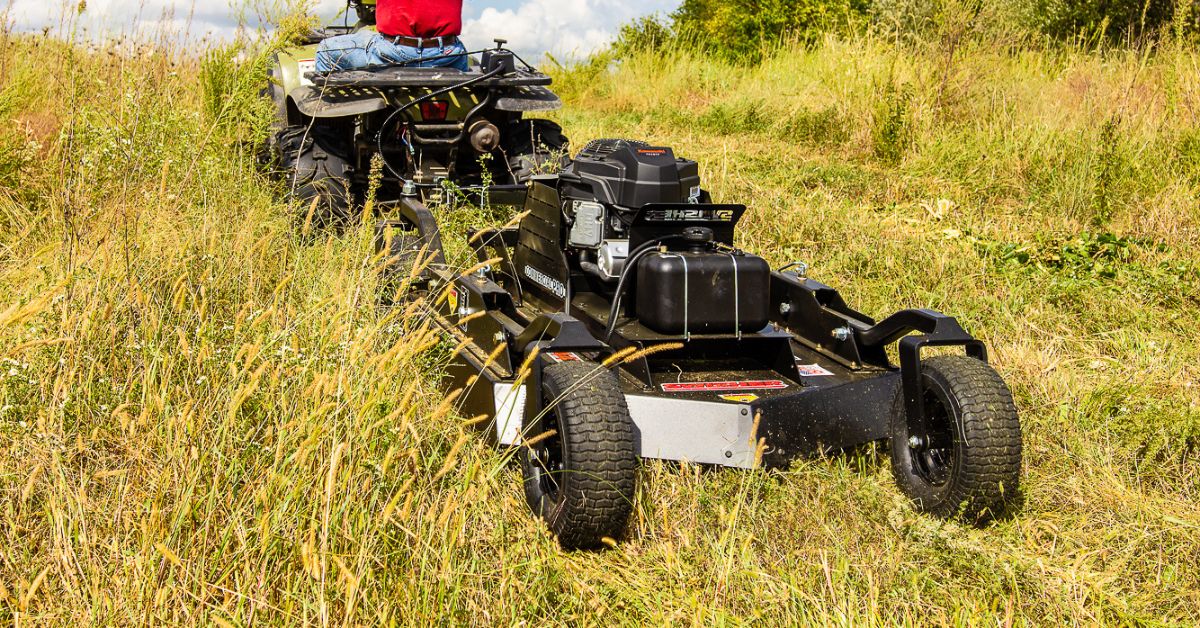
When choosing a mower setup, too many people focus on the engine size or brand. What they should be focusing on is the cutting width and height, as these directly affect how efficiently you work and how your property looks when you’re done. If those two settings don’t match your terrain and conditions, you’ll either waste time or put unnecessary strain on your equipment. To make sure you get it right for your yard, here’s what you need to know about mower cutting width and height.
Cutting Width: More Than Just a Bigger Deck
A wider cutting deck covers more ground in a single pass. On open acreage, this can significantly reduce mowing time. Fewer passes mean less fuel used and fewer hours on the machine.
But wider is not automatically better. If your property includes trees, fencing, trails, or uneven ground, an oversized deck can limit maneuverability. In tight spaces, a narrower deck often delivers better control and a cleaner result. The key is matching deck width to the layout of your land, not just how big it looks on paper.
There’s also a performance factor. Larger decks require adequate engine power to maintain blade speed and cut quality. Pairing a wide deck with insufficient power can leave material uneven or require slower travel speeds, which defeats the purpose of going wider in the first place.
Cutting Height: Performance and Grass Health
Cutting height plays a major role in both appearance and long-term grass health. Cutting too low can stress grass, weaken root systems, and leave areas vulnerable during hot or dry conditions. While a shorter cut may look clean at first, it often leads to slower recovery and thinner growth over time.
On rough or uneven terrain, slightly higher height settings help prevent scalping and reduce impact on blades and belts. This is especially important when working over bumps, dips, or hidden debris. Maintaining proper height also reduces strain on the mower itself, helping preserve blade sharpness and drivetrain components.
Seasonal adjustments matter as well. During peak growth, raising the deck slightly can promote healthier regrowth and better moisture retention. When growth slows, modest adjustments can help maintain consistency without stressing the turf.
Matching Width and Height to Your Property
Now that you better understand the key factors about mower cutting width and height, it’s time to put that knowledge to use. Start by looking at how much uninterrupted space you actually have. If most of your mowing involves long, straight runs, maximizing deck width makes sense. If you frequently slow down to navigate trees, buildings, or uneven transitions, maneuverability becomes more valuable than raw coverage.
Next, evaluate how consistent your terrain is. Properties with frequent elevation changes or hidden irregularities benefit from flexible height adjustments that can adapt to changing ground conditions without forcing you to constantly stop and reset.
Finally, consider how often conditions change throughout the season. Rapid growth, wet ground, or tougher material may require temporary adjustments in both speed and cutting height. A zero-turn mower with attachments that allow easy adjustments will help you maintain performance without sacrificing efficiency.